Echoes of Aincrad Wiki - Partners and Party Commands
Partner selection, Support mode, Offense commands, aggro relief, Support Skills, team-up attacks, Inn loadouts, and role planning.
Updated 2026-07-07Known Facts
- Players choose partner characters at quest start; some quests allow one partner while others allow multiple.
- Large battle scenes may add guest players beyond the normal partner setup.
- Partners bring weapon identities and active skills that differ by character.
- Partner equipment and skills are managed from the Inn chest.
- Partner Sword Skills, equipment, and loadouts can be adjusted to support the player's build.
- Partners can provide support effects such as healing, buffs, defense help, enemy pressure, or scouting value.
- Partner commands can create breathing room when the player needs stamina recovery.
- Team-up or combination attacks are major damage windows and should be saved for important encounters.
- Known partner profiles cover mentor, scout, control, heavy burst, and ambiguous story-risk roles.
To Verify In-Game
- Final support skill list for every partner.
- Exact team-up attack names, cooldowns, SP costs, and unlock conditions.
- Quest-by-quest partner count limits.
- Whether Switch Mode and Free Mode labels differ by platform or final UI wording.
- Large-scale battle guest character counts and whether raid parties are playable.
Partners are not only story companions. They are the main way Echoes of Aincrad turns single-player combat into a party-style survival loop. A good partner setup covers the weakness of your weapon, buys stamina recovery time, and creates burst windows when a boss is vulnerable.
What partners solve
- Pressure relief — Send a partner forward or recall them so enemy attention shifts at the right time.
- Resource recovery — Use partner pressure to refill stamina instead of dodging until empty.
- Support timing — Healing, buffs, defensive tools, or scouting value can stabilize difficult routes.
- Boss burst — Save team-up attacks for stagger windows, phase transitions, or dangerous final pushes.
Inn loadout work
Before a quest, use the Inn chest to check partner equipment, weapon category, and skills. Treat partner setup like your own build: a heavy weapon player may need aggro relief; a fragile fast weapon may need healing or control; a field route may benefit from scouting and faster objective reading.
Free Mode vs Switch Mode
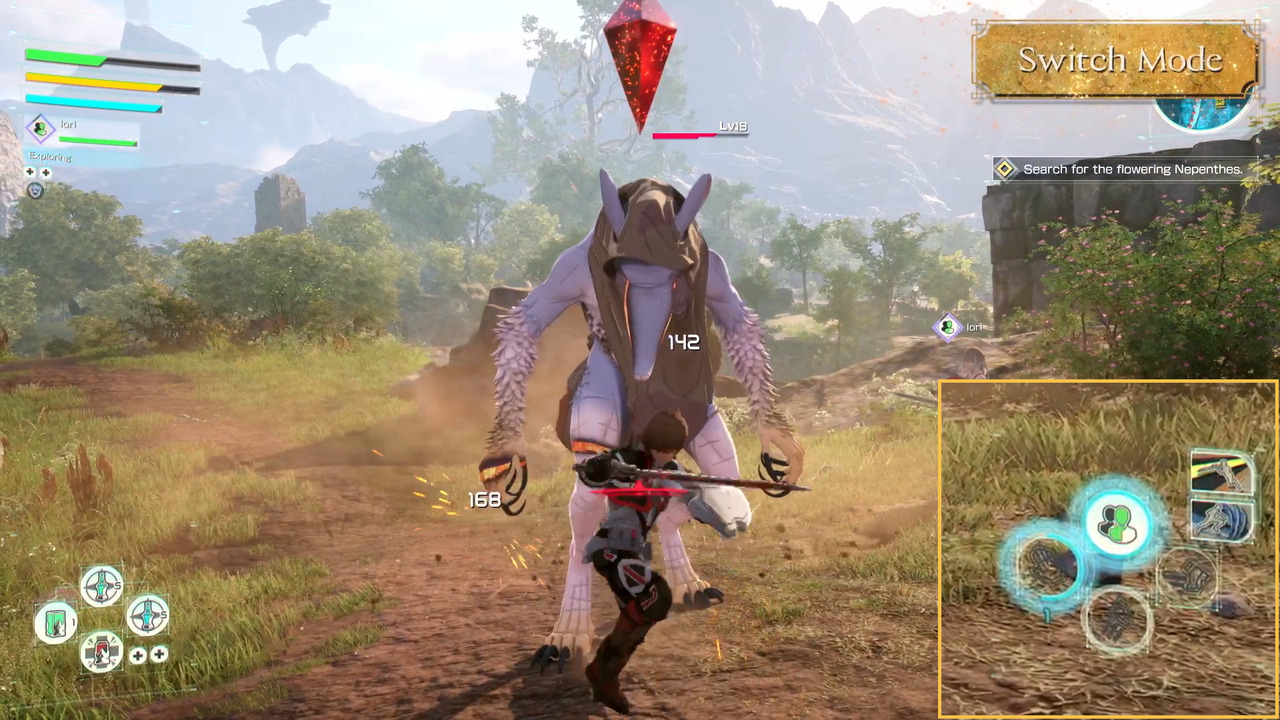
Use Free Mode when you want partners to stay active, spend their skills, and fight whenever possible. Use Switch Mode when you want a more deliberate tag-in rhythm: dodge or back out, let the partner take pressure, then re-enter once stamina and spacing are stable.
Support and combination skills
Support Skills can stabilize a route through healing, buffs, debuffs, or control effects. Combination Skills should be treated as major burst tools, saved for boss windows, elite enemies, or dangerous multi-enemy fights instead of routine field mobs.
Partner roles by known profile
| Partner | Known weapon profile | Route value |
|---|---|---|
| Iori | Sword & Shield | Stable early safety, frontline pressure, and learning-room support. |
| Argo | Dagger | Exploration flavor, scouting context, and fast flanking pressure. |
| Wyzeman | Mace & Shield | Control, stagger pressure, and safer setup for heavy player weapons. |
| Zash | Two-Handed Sword | Raid preparation ally with protective support potential and AoE burst value. |
| Saayu | To verify | Emotional anchor and party-reassurance profile until combat role is confirmed. |
| Stina | One-handed Mace | Quiet control profile; full partner or guest status should be verified in-game. |
| Musou | Two-Handed Axe | Wide pressure and group-route value once his final skills are verified. |
Selection by route goal
- Learning a boss — Start with Iori or another stable support profile before testing risky partners.
- Mapping and treasure routes — Argo fits routes where information and fast movement matter.
- Heavy player weapon — Wyzeman or Zash can help create safer damage windows, depending on final support skills.
- Group-heavy route — Musou's axe profile and Zash's area value are the first profiles to test.
- Death Game run — Do not choose by favorite design alone; pick the partner whose support timing you already trust.
Command discipline
Do not command partners randomly. Use commands with a reason: pull attention so you can recover, recall a partner before a dangerous boss area, or commit them to offense when your Sword Skills are ready. The goal is rhythm, not constant button noise.
Best internal next reads
Compare partner needs against weapon identity, then review boss preparation before taking a risky route or Death Game save into a barrier fight.